

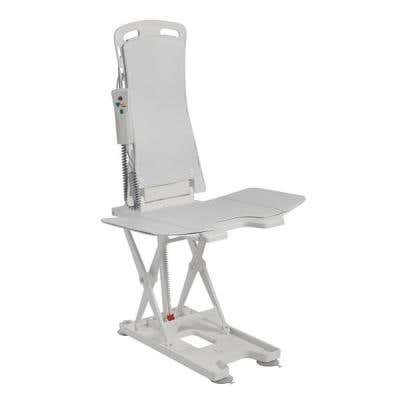
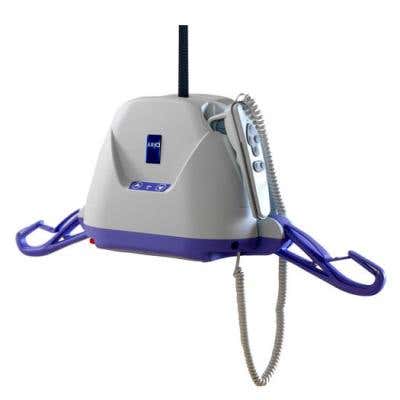
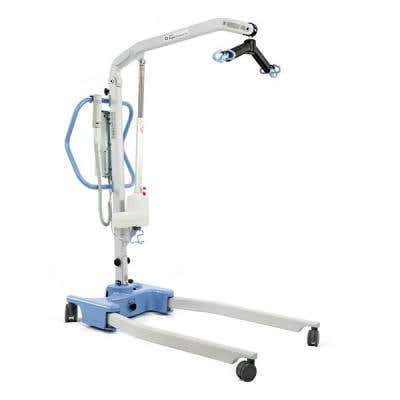
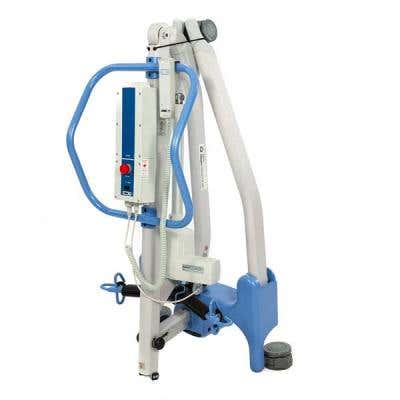
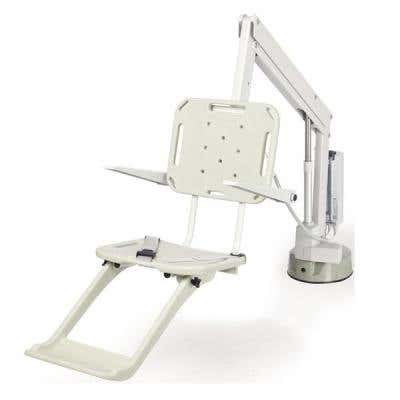
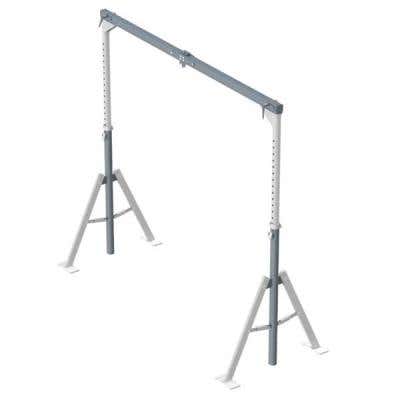
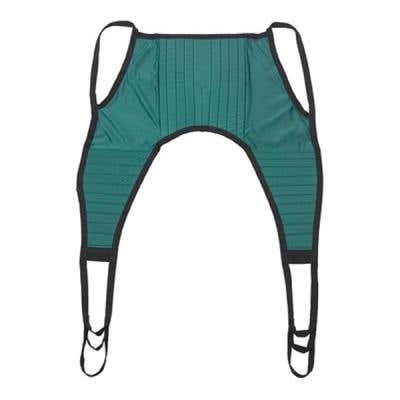
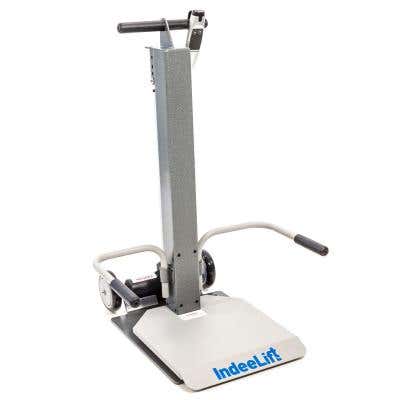
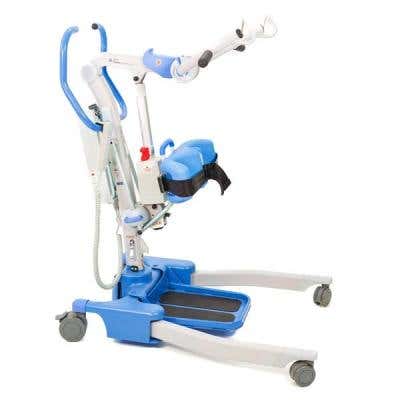

aXs2 Pool Lift
- Integrated armrests
- LiftOperator® Intelligent Controller with 24V battery
- Powder-coated stainless steel and aluminum construction

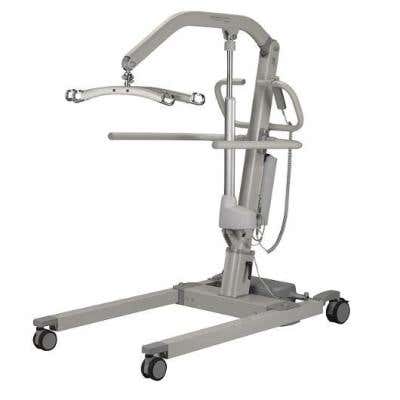
ProCare BestStand SA600
- Dual 3" front casters provide low base height of 4.7"
- Adjustable knee pad unit is wider to fit more patients
- Low base height provides maximum stability and fits under lower beds

Portable Pro 2
- All stainless steel construction
- Flip-up armrests
- Adjustable footrest & lap belt

Lift Walker
- Detachable Spade seat, used for lifting the client
- Straight steering, to facilitate transportation in the corridor
- Safety straps for body weight reduction and to ensure client safety


Scout Excel Pool Lift
- Whisper quiet 360 degree rotation
- Adjustable seat pole
- Flip up armrests

ISA Compact Stand-Up Lift
- Extendable lifting arm adjusts to nine different lengths to accommodate a variety of users
- Lower leg cushion provides six height positions with ErgoSupport swivel feature for added comfort
- Foot pedal base operation allows the use of body weight to widen the base and limit upper body strain

Molift EvoSling Amputee MediumBack Net Padded
- Secure and comfortable
- A small leg support opening minimises the risk of the user slipping through the sling
- Anti-slip for added security

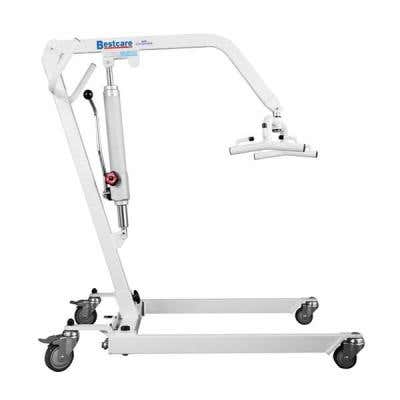
Protekt 600 Lift
- 6 point spreader bar allows for multiple sling options, safer patient handling and a wider range of transfers.
- Ergonomically designed foot pedal offers hands free opening of base which adjusts and locks easily for added security.
- Dual rear locking casters
Patient lifts are designed to make patient transfers safer. They're important tools in both home and professional care settings, and contribute to patient dignity, comfort, and safety.
Patient lifts are also important to caregiver safety. When transferring a patient manually, a caregiver must assume a large amount of the patient's weight. The caregiver is often put into unnatural positions simply due to logistics of the transfer, which further contributes to the risk of caregiver injury. Finally, the repetitive nature of caregiving and transferring patients means a high injury rate in caregivers. With back injuries being particularly common, the benefits of a patient lift cannot be overlooked.
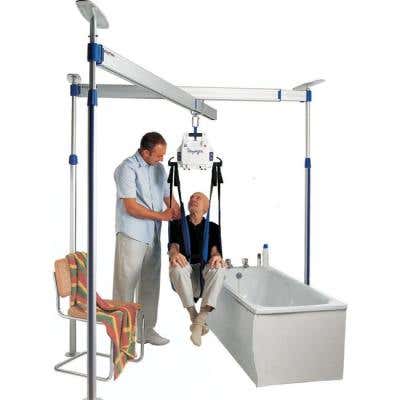
Lifts are designed to accommodate a wide range of demands and settings. Some lifts are portable and can be folded up for convenient storage. Others are designed to run on track systems installed in the ceiling overhead. Pool lifts and bath lifts provide specialized accommodations to make these particularly dangerous transfer settings safer. You will also find that some patient lifts include digital lift scales for multi-purpose use.
It's also important to consider that some lifts are powered, while others require manual control. Both powered and manual lifts make transfers easier for both the patient and the caregiver. Powered lifts take less physical effort on the caregiver's part, making them popular in professional care settings where caregivers must perform many patient transfers every day.
Most medical patient lifts operate in conjunction with a sling or harness, except for pool and bath lifts, which feature a seat. All lifts are designed to help support and stabilize the patient, but they must be used correctly in order to be safe.
Patient lift systems are a vital piece of equipment for many care settings. In hospitals, rehabilitation centers, retirement care centers, and even home care settings, patient lifts can improve the ease of caregiving and can help to make transfers easier, more comfortable, and safer for patients.