

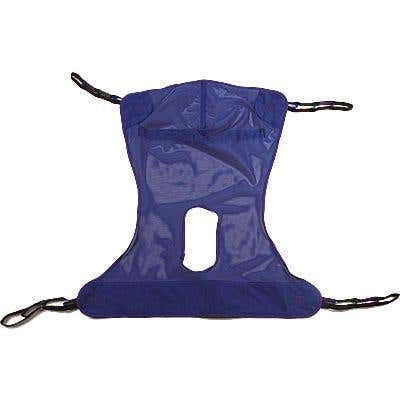


Milford Standard Buckled Sling
- Use with Milford Lift

Molift EvoSling HighBack Net
- The sling provides a comfortable reclined sitting position
- The pocket in the lower back and on the leg supports facilitates application of the sling
- The net sling is equally hard-wearing, durable and flexible

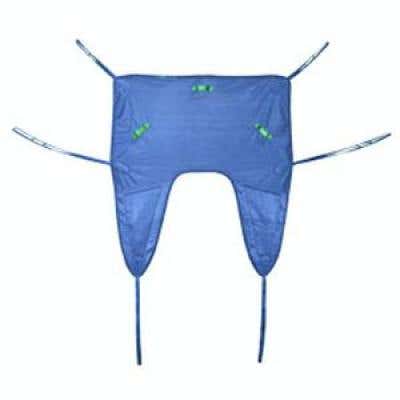
Toileting U-Sling
- Mesh fabric works best for showering and sitting in tub
- Four-point hook up works on 4-point or 6-point cradle
- Optional head support folds-down when not required

Pediatric Full Body Padded Polyester Sling
- Universal sling
- For bed to chair and chair to commode transfers as well as floor pick-ups
- Made for 2 pt and 4 pt spreader bars

Molift EvoSling MediumBack Padded
- The sling provides a comfortable upright sitting position with full back support
- Users place their arms inside the sling
- A pocket in the lower back and on the leg supports facilitates application of the sling

Molift EvoSling HighBack Padded
- EvoSling HighBack is suitable for lifting to and from a lying position, as well as from the floor
- The sling provides a comfortable reclined sitting position
- The pocket in the lower back and on the leg supports facilitates application of the sling

Universal Commode Sling
- Compatible with most patient lifts
- Breathable mesh material
- Multiple handles

Hoyer Quick Fit - Mesh
- Additional padding in seat for added comfort and support
- No need for side suspenders
- Mesh option for bathing

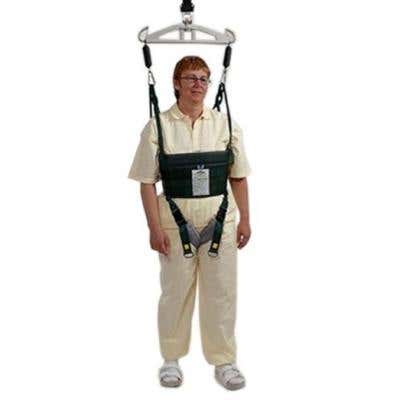
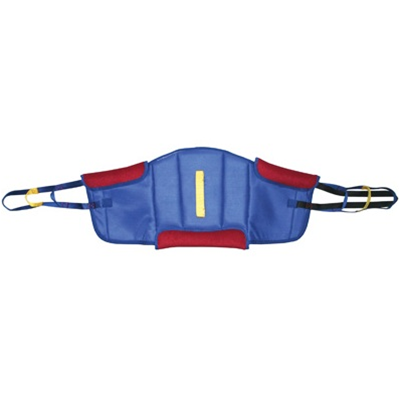
Walking Standing Harness Sling
- Built for comfortable use
- Structured with polyester fabric
- Designed for standing or walking tasks
Most patient lifts operate with the use of a sling. Slings come in a wide variety of styles and designs, and are integral to ensuring a safe patient transfer. In order for a sling to be suitable, it needs to fit the patient correctly and be well paired with the patient lift that you are using.
There are four main categories of patient slings – Universal, Commode, Stand Assist, and Disposable. Each of these sling types is made slightly differently to best accommodate its intended use. The exact type of sling that is right for you will depend on the type of transfers that you will be doing.
Slings are made of soft materials including fabric, mesh, nylon, and polyester. They support and wrap around part of the patient's body, and attach to patient lifts by the use of multiple straps. Some slings feature soft linings to help cushion and protect a patient's body.
Patient slings have differing sizes and weight capacities. When working with a patient, it is important that a sling fits him or her correctly. Using an incorrectly sized sling can make for an unsafe transfer, and has the potential to rub and pinch the patient. If you are working with multiple patients, then you will need to have multiple slings to accommodate their different sizes.
Don't forget to also make sure that a sling's weight capacity is appropriate for the patient. Slings have weight capacities ranging from 100 to 850 pounds, so you're sure to find an appropriate sling for any patient.
When choosing a sling, carefully consider what type of slings the patient lift you are using is designed to work with. Some lifts work only with one particularly sling style, while others offer more versatility and can work with different sling types.